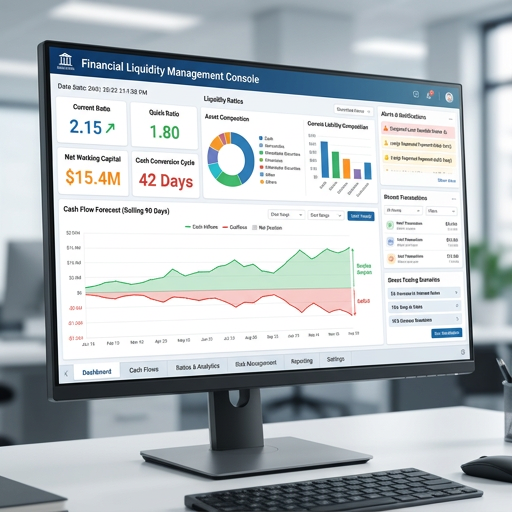
Real-time visibility and control over your positions across accounts and currencies. Management and oversight of liquid assets, ensuring clear cash flow monitoring and control to address financial requirements, while maintaining an ideal balance between liquidity and profitability.
Predict future cash flows by analyzing past financial data and considering current market conditions.
Define the sequence of steps, assigning roles and responsibilities, and setting up triggers and conditions for automated actions.
Manage the levels of current assets (such as cash, accounts receivable, and inventory) and current liabilities (such as accounts payable and short-term debt) to optimize liquidity.
Advise to invest excess cash in short-term, liquid instruments to generate returns while maintaining accessibility to funds.
Establish lines of credit or other forms of short-term financing to provide additional liquidity when needed.
Balance the use of debt financing to support liquidity needs without overleveraging the company.
Develop strategies to address potential liquidity crises or disruptions, such as economic downturns or unexpected market events.
Funds stuck in the wrong place and no live view of your position. Know exactly what you hold and move it where it’s needed, when it’s needed.